Many churches are streaming their worship services online for broader reach. Proper video lighting creates an environment for online viewers to feel connected to the worship service. Here’s what you need to know about lighting for worship.
Let’s talk about lighting for smaller shots first. These are the setups for interviews, testimonials, podcasts, etc. We’ll also look at worship spaces later in this article.
Why Proper Lighting Matters
Good lighting does many important jobs in videos. With enough light, your videos look cleaner without those grainy, fuzzy spots. This makes everything look better.
When people see the pastor or worship team clearly, they pay better attention. Online members will appreciate it if everything’s well-lit.
Adding proper lighting for live streaming makes it look more professional. This helps your videos look more polished and well-made, just like the videos people are used to watching online.
Side Note: Make sure your audio is the best it can be. People will forgive poor video before they’ll forgive bad audio. Ideally, we want both to be great.
Essential Lighting Techniques for Church Worship
Three-Point Lighting Basics
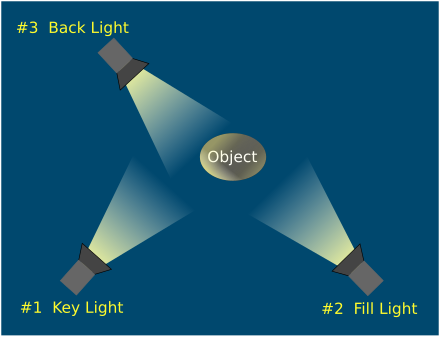
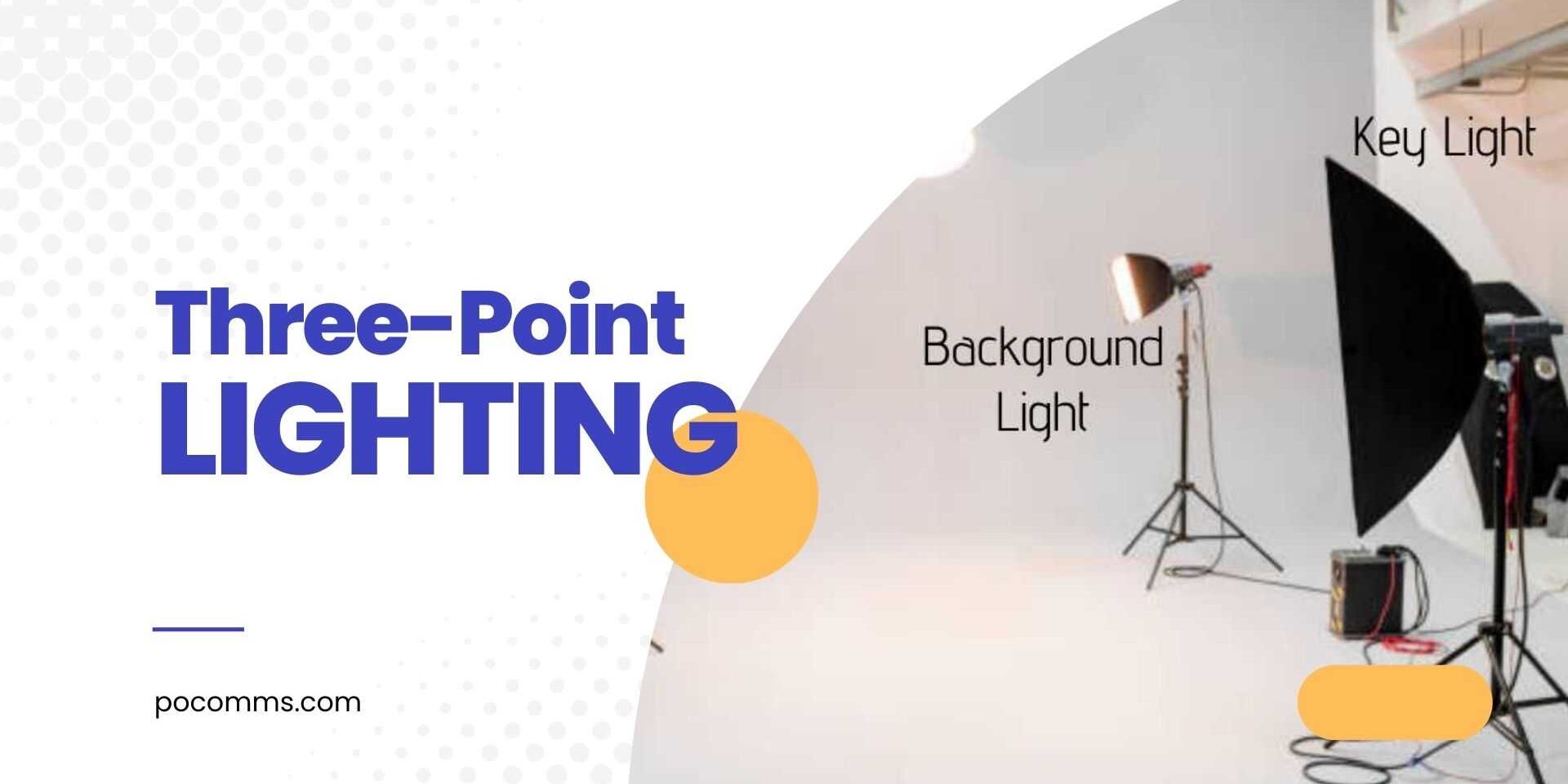
Three-point lighting is foundational:
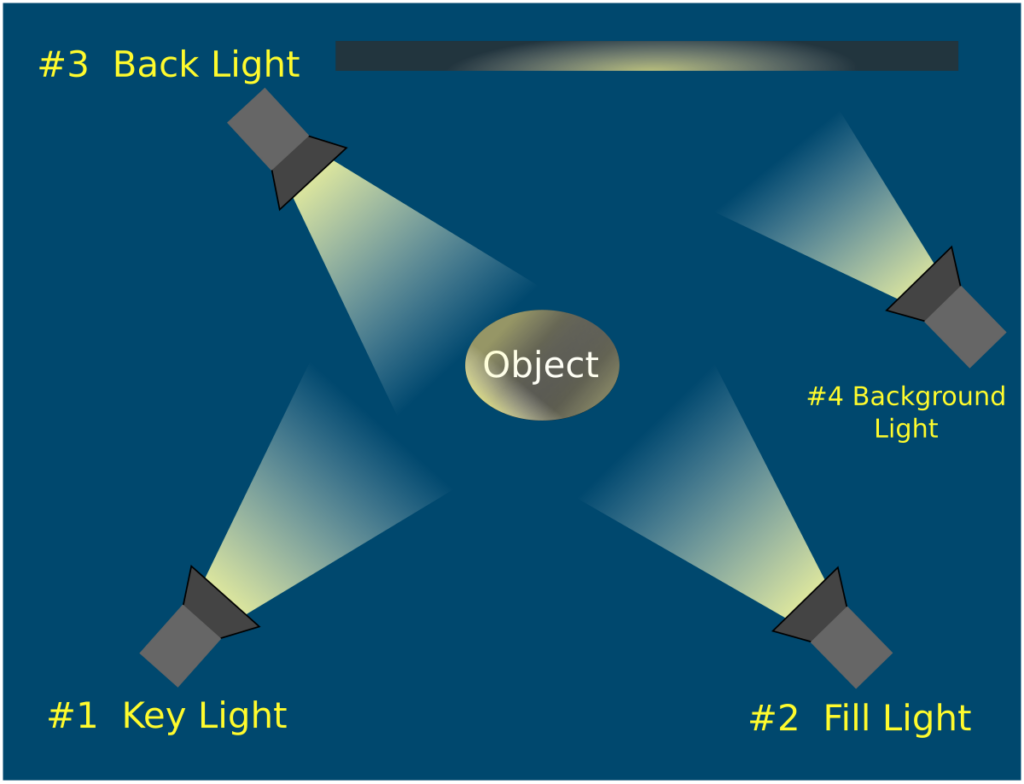
- Key Light: Position your main light at a 45-degree angle to your subject (worship leader, pastor, etc.). This light should be the brightest and defines the primary illumination.
- Fill Light: Place this softer light opposite the key light to fill in shadows. For worship settings, the fill light should be about half the intensity of your key light.\
- Back Light: Position this light behind and above your subject to create separation from the background, adding depth and dimension.
Additional Lights
Depending on what you’re looking for in a shot, more, or fewer lights can be used. The background light is an additional light to consider when doing a studio shot.
- Background Light: This light shines towards the backdrop. This is often used, especially on solid backgrounds or green screens, to help make that part of the image consistent. It’s not considered part of the Three-Point Lighting System.
- This is especially useful for smaller, intimate shots.
For worship spaces, let’s look at a few challenges.
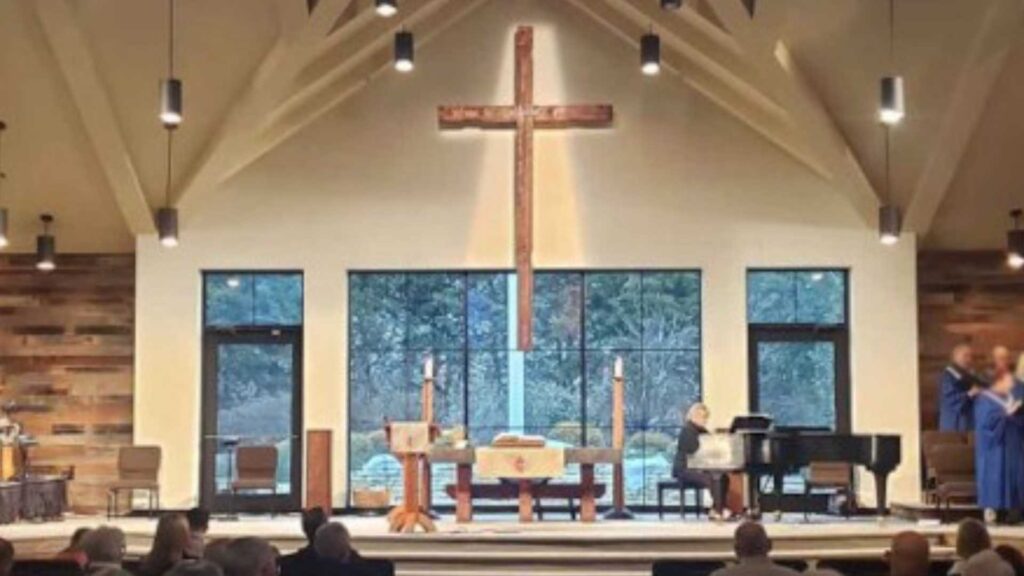
- Backlighting: First is the window behind the stage. This is quite challenging because your artificial lighting has to overcome the natural lighting in the background.
- Lights Overhead: If lights are positioned incorrectly, they can produce dark shadows over the eyes of the person on stage. This happens when the lights are too close to the speaker and above their head.
- Lights Too Far Away: If lights are positioned too far away, they may not offer correct lighting. Make sure the power is sufficient to cover the intended area.
Stage Lighting Considerations
Church stages present unique challenges:
- Balanced Coverage: Ensure lighting is even across the worship team and speaking areas. This is also called wash lighting.
- Color Temperature: Maintain consistent color temperature (typically 3200K for warm lighting or 5600K for daylight). Take a chance and experiment to see what works best for you. However, this range is a great range to start.
- Minimizing Hotspots: Use diffusion to avoid harsh lighting on foreheads or reflective instruments. This is sometimes difficult for band members.
- Minimize backlighting: When there’s a window behind the speaker such as in the image below, it takes a lot of front lighting to overcome it. This is especially true on bright sunny days.
Final Lighting Tips for Church Video Production
- Plan for camera positions: Light for where your cameras are, not just for in-person viewing.
- Create lighting cues: Develop specific lighting presets for different service elements. Consider the mood you want for prayer time, sermons, and special aspects of worship. Many lightboard systems allow for presets. Makes life so much easier if you rely on volunteers for these roles.
- Regular maintenance: Clean fixtures and check color consistency monthly. This belongs under the manufacturer’s recommended maintenance schedule. Of course, replace any burnt-out bulbs as needed.
- Train volunteers: Develop simple lighting guidelines for your production team. You’ll be surprised at how easy it is to make a simple job aid that helps everything run smoothly.
By implementing these lighting techniques, your church can create engaging, high-quality video content that effectively ministers to in-person and online congregations. Remember that good lighting isn’t about creating a performance atmosphere—it’s about removing visual barriers so your message can connect more effectively with viewers.